Rick Chambers & Associates, LLC
Strategic Communications
  • Home
  • What We Offer
  • Guiding Values
  • Blog
  • Books
  • Contact Us

Radiance: To The Moon

2/25/2021

1 Comment

 
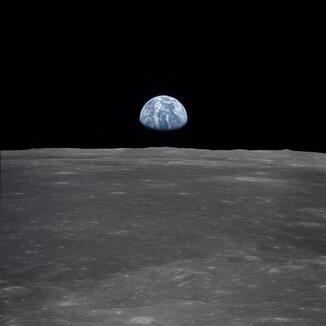
PictureNASA image
This is the third in a series of blogs offering a behind-the-scenes look at Rick’s first novel, Radiance. This blog contains spoilers.
 
In the wee hours of a Saturday morning, February 6, 1971, I lay in bed alongside my snoring father and quietly wept because I wasn’t staring at the moon.
 
Apollo 14 astronauts Alan Shepard and Ed Mitchell had landed their lunar module in the Fra Mauro region early the previous morning. Being a school day, I missed their first moonwalk but hoped to catch their second one live and, for the first time, in color. Unfortunately, that would happen in the middle of the night. I was staying with my dad at his parents’ house, as his brother’s family was visiting—and, regrettably, sleeping in the TV room. But Dad agreed to set his alarm clock for 1 a.m. and take me into the room, where we’d huddle around the television, audio low, to watch the moonwalk. But he slept through the alarm, as well as my attempts to wake him. I cried myself back to sleep. (He apologized profusely the next morning.)
 
Some of my earliest memories involve space exploration, both real (Apollo 7 was the first mission I recall following on the news) and fiction (Lost In Space is the first TV show I remember watching). The moon in particular fascinated me. It still does. I’m quick to look up at it on an early morning run, or aim my small telescope at it and see the lunar mountain peaks catch the rising sun just beyond the terminator.
 
And I still wonder what it was like for those moonwalkers—Shepard and Mitchell, Armstrong and Aldrin, and the other eight men—to amble through the regolith, to see the blackness of space where hung the Earth in vibrant blue, to feel gravity tug at them with one-sixth its strength back home.
 
Radiance gave me the chance to do it in my head, and on the printed page.
 
Granted, most of the tale happens inside Modos, a massive, dome-topped city buried in lunar soil, where dwellers see a holographic blue sky or a faked starry night. But I do take one of the characters out for an unexpected (and nearly deadly) stroll in the lunar dawn. And in doing so, my mind reflected on the color video I eventually saw of Apollo 14’s EVA, along with film of the subsequent moon missions.
 
By the time Radiance saw print, I began to doubt the timing of my story. In 2010, it was hard to imagine we’d have such a strong presence on the moon by the end of the century. But along came the Artemis program, which could have Americans back on the moon as soon as 2028. Modos suddenly doesn’t seem quite so out of reach.
 
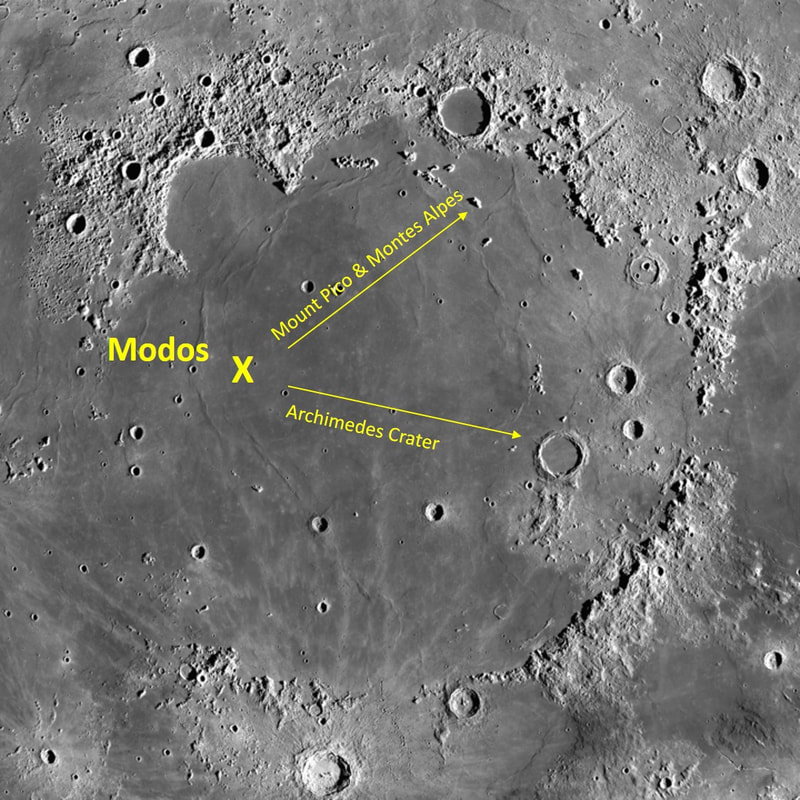
If you happen to glance up at the moon and wonder where Modos may reside one day, look at the charcoal, circular area to the upper left of the moon’s center. That’s Mare Imbrium. Check out the map below to see where Modos will be located, with Mount Pico and the Montes Alpes to the northeast and Archimedes to the southeast. Quite the vista Lateinos will have!
Picture
1 Comment

Radiance: The Long and Winding Road - Part 2

2/16/2021

0 Comments

 
Picture
This is the second in a series of blogs offering a behind-the-scenes look at Rick’s first novel, Radiance. This blog contains spoilers.
 
Two years, and barely a nibble.
 
For The Sake Of Ten generated a sizable number of preprinted rejection letters, usually including the words like “doesn’t fit with our portfolio” or “not seeking new material at this time” and almost always “good luck.”
 
In the interim I’d published three novelettes through CRC Publications--Anything But Free, Something To Hide, and Casey’s Grudge—so I felt confident I could write a good story. And amongst the rejection letters for Ten were two that included handwritten notes from editors; one listed all the things he enjoyed, calling it “eminently publishable,” and the other strongly encouraged me to keep shopping it around. “This book deserves to be published,” he wrote.
 
While those notes lifted my spirits, the steady stream of stiff-arming left me discouraged. I went through the manuscript a few more times, searching for the One Big Flaw that, once resolved, would make the book saleable. What I found were small things that needed tweaking.
 
By this time, I was several drafts into a second novel, one that takes place on a parallel Earth. That one remains unfinished; I feel it’s too similar to For The Sake Of Ten, although even today I haven’t entirely given up on it. But back then I had enough enthusiasm for it that I decided to put Ten on a shelf for a bit.
 
There it remained for most of the next six years.
 
Every now and then I’d dig it out, do a light edit and send it around to publishers without success. One of the changes I made was the title. For The Sake of Ten described only part of the story, albeit a tremendously important part. But I wanted something broader, something that covered the full context of the tale. And I wanted the title to be a single word. Thus it became Radiance.
 
By 2002 I finally gave up trying to sell the book on my own and started looking for an agent. I’d resisted going the agent route before out of simple intimidation; I had no idea how to find a reputable one. Having finally decided that was the only way Ten would ever be published, I started as we do most things nowadays: with a Google search.
 
Big mistake. HUGE mistake.
 
Yes, I found an agent. Partly to spare you the long, sordid tale, and partly to avoid fully outing my foolishness, suffice it to say I got scammed. The agent charged me for an edit that never got done, then promptly vanished. No response to phone calls, emails or even certified letters over the course of a full year. Later I discovered this individual was being investigated for fraud.
 
Frustrated and heartbroken, I put away the manuscript, doubting it would ever be published.
 
Career-wise, the next few years were extraordinarily stressful, and I rarely gave Radiance a thought. But by 2009 I came to realize that Radiance had a fundamental problem: It was too religious for science fiction publishers, and too science fiction-y for religious publishers. To get the book out there, I’d have to do it myself.
 
I’d explored self-publishing back in the ‘90s, but it proved wildly expensive and lacked a workable means of distribution. But by the end of the ‘00s, tools like print on demand and online book sellers made it doable.
 
Having left Radiance untouched for several years, I dove into the harshest edit yet of the manuscript, slashing at least 12,000 words and an entire chunk of text I realized added nothing meaningful to the story. By early 2010, Radiance was in the hands of a well-known self-publisher. After working through a basic evaluation, the process moved rapidly. By September of that year, Radiance was available on Amazon, Barnes & Noble, and in a number of bookstores. Over the coming year I saw modest sales in the midst of book signings and speeches.
 
The lessons learned through this two-decade experience were many, some of them hard ones. Had I not made some poor decisions and been discouraged so often, Radiance might have appeared far sooner than it did, perhaps through a traditional publisher. But I happen to believe God does things for a reason and in His timing. In that light, Radiance appeared precisely when it needed to.
 
In coming blogs, I’ll dive deeper into the story and the characters in Radiance.

0 Comments

Radiance: The Long and Winding Road - Part 1

2/10/2021

0 Comments

 
Picture
This is the first in a series of blogs offering a behind-the-scenes look at Rick’s first novel, Radiance. This blog contains spoilers.
 
The story behind my 2010 novel, Radiance, is a long one—more than two decades.
 
First, a quick synopsis of the book. Radiance centers on an out-of-work PR professional living on the moon who is drawn into two extraordinary events: a dark conspiracy led by his former boss, and the search for 10 special individuals by two strangers who are more than they appear. These events ultimately intertwine to decide the fate of humanity—and much more.
 
Radiance is my first novel, but not my first published book. In the mid-1990s I wrote three novelettes for a publisher serving adult literacy and English As A Second Language programs. (I’ll get around to blogging about those at some point, too.) But the road to Radiance began before any of those.
 
Radiance has its roots in two short stories I wrote in the early 1990s. “Go Ye” was a piece I pitched to an international church magazine. In the story, two strange men confront a church’s elders, challenging them to do more to serve the poor, the sick and the suffering. The elders are offended and throw the men out, but the pastor follows them outside—just in time to see them fly off in a spaceship. He realizes they are missionaries sent to Earth because so many human Christians have failed to obey Jesus.
 
The magazine not only rejected the story, but the editor upbraided me for portraying the church in such a negative light. Thirty years later, seeing that many Christians continue to turn their backs on the very people Christ called us to love and minister to, I stand by that portrayal.
 
Shortly after came another short story, “For The Sake Of Ten.” This one is much closer to what later became Radiance. Based on the biblical story of Sodom and Gomorrah, “Ten” takes place on an asteroid refueling station where an angel comes looking for 10 righteous people—the number needed to save the asteroid from destruction. As in the Bible tale, the quest fails.
 
“For The Sake Of Ten” is much like Radiance—Canaan, the Cathedral, cyborgs, even the telltale “radiance” all make an appearance. The novel is quite different in other ways, but its strongest beginnings are found here.
 
I shopped “For The Sake Of Ten” around for a while without success. Rather than give up on it, I started thinking about its potential as a novel. Right after New Year’s Day 1993, I decided to give it a shot. With my first PC—complete with a 100MB hard drive and a copy of WordPerfect software—I began investing long hours in writing the novel, mostly on weekends. My day job had become quite stressful by then (and would continue its high-pressure spiral for the next 18 years, but that’s a tale for another day), so I didn’t have the energy for nighttime work. But that creative outlet was lifesaving on Saturdays and Sundays.
 
I finished the first draft at the end of March. I kept the short-story title, For The Sake Of Ten, and would hang onto it for over a decade.
 
I edited and rewrote the draft over and over for months. I also shared it with people I knew would give me honest, critical feedback—both editorially and story-wise. Before year’s end, I had what I thought was a solid novel ready to sell to an eager publisher.
 
Truth is, that’s when my own quest was just beginning.

0 Comments

    ** SPOILER ALERT **

    The blogs in this series contain details of books, stories, screenplays and other writings by Rick Chambers. To avoid spoilers, read or watch the original material before reading this blog.

    Archives

    March 2021
    February 2021
    December 2020
    November 2020
    October 2020
    September 2020
    August 2020
    July 2020
    June 2020

    Categories

    All

    RSS Feed

About Us

Rick Chambers & Associates, LLC, brings a solid track record of strategic, diverse, objective-based communications and public relations services. RC&A works closely with clients to understand their business, develop stakeholder relationships, build meaningful dialogue and help share their stories effectively.

Picture
Rick Chambers & Associates, LLC
1514 Kingsbury Drive
Portage, MI 49002-1664
USA
269.873.5820
[email protected]