Rick Chambers & Associates, LLC
Strategic Communications
  • Home
  • What We Offer
  • Guiding Values
  • Blog
  • Books
  • Contact Us

Random Precision: 'Enmity'

8/28/2020

0 Comments

 
Picture
This is the 10th in a deep-dive series on the stories in Rick’s newest book, Random Precision. The following blog includes spoilers.
 
Recently I was reading a collection of short stories by Arthur C. Clarke, one of my favorite science fiction authors. The collection included a few short introductions to some of the stories. In one case, he lamented how many would-be SF writers fell into overused tropes, using as his example a story of two space travelers who land on Earth in the ancient past to become Adam and Eve.
 
I chuckled, albeit awkwardly, as I thought about “Enmity.”
 
In my defense, “Enmity” isn’t about the origins of Adam and Eve, but rather what led to their infamy. The serpent, in this case, isn’t the ground-slithering creature we know. Given that the Genesis account puts special emphasis on the creation of humans, made in the image of God, and that the serpent’s “snakeness” happens after it’s cursed, I thought the serpent here ought to be exceptionally unusual. Enter Herpet and a little twist in time.
 
The title is a direct reference to the Genesis story, by the way. And Herpet (get it?) is the one who instigates the enmity that marks the rest of human history.
 
This story was another community literary award winner. I thoroughly enjoyed those contests and the opportunity to read excerpts to an audience.
 
Before anyone gives me grief: Yes, I realize the forbidden fruit almost certainly wasn’t an apple. But I mean, come on, it makes for a great final line!


0 Comments

Random Precision: 'Moksha'

8/19/2020

0 Comments

 
Picture
This is the ninth in a deep-dive series on the stories in Rick’s newest book, Random Precision. The following blog includes spoilers.
 
“Moksha” has a surprising genesis: It was originally intended as a comic book. Upon reflection, I realize it probably wouldn’t have worked—too much talking, not enough action. But it was fun to think of it in a graphic novel kind of way.
 
The invitation came from some folks I met while working on Star Trek New Voyages. I’ll always be grateful for the opportunity, and for the nice way they told me “Moksha” wasn’t a good fit. Still, I enjoyed doing my own take on Groundhog Day.
 
“Moksha,” oddly enough, has a tenuous link with an Open Door novelette I wrote in 1995, Something To Hide. While vastly different stories, both are inspired by the story of Queen Esther and how she was called to a great—and dangerous—mission. In Amit’s case, it was a mission he didn’t want and found it all but impossible to escape. But “relief and deliverance” (Esther 4:14) did come from somewhere else, even as Amit’s freedom perished.
 
“Moksha” does raise an admittedly uncomfortable question: If we truly believe we’re called to a specific purpose in life, and that purpose isn’t what we want it to be … what do we do? Fulfill that calling? Or turn our backs on it, even if that rejection costs someone else? Ponder that a spell.
 
Once again I experiment with a little humor despite the dire nature of the story. Extra credit if you pick up on the (deliberately vague) Monty Python reference.

0 Comments

Random Precision: 'Thicker Than'

8/13/2020

0 Comments

 
Picture
This is the eighth in a deep-dive series on the stories in Rick’s newest book, Random Precision. The following blog includes spoilers.
 
I heard about a short story contest that was looking for speculative tales related to climate change, so I decided to see what I could do.
 
I wasn’t interested in penning a Mad Max dystopian tome, though. I wanted to step just a few decades into the future, drawing some reasonable conclusions about what might happen. The megadrought in the western U.S. was getting a lot of attention--it’s still happening, by the way—as was the rapidly shrinking Ogallala Aquifer, the largest underground water source in the United States. And there was the ongoing discussion about piping freshwater from the Great Lakes to arid regions elsewhere.
 
So my thought became: What if drought-struck communities, having lost a war for freshwater, started a “wet market” (not in the way the term is typically used) to purchase stolen water from the Great Lakes? And what if the states around those lakes formed a law enforcement group to stop it?
 
It’s an interesting premise, but not a particularly human one. And I definitely wanted a human perspective. Thus was formed Brooks and his little daughter, Dayla, who presents her dad with a moral dilemma: When does compassion for others overrule dispassionate laws, especially those rooted in greed? “I have seen a grievous evil under the sun: wealth hoarded to the harm of its owners, or wealth lost to some misfortune, so that when they have children there is nothing left for them to inherit.” (Ecclesiastes 5:13-14).
 
Much of “Thicker Than” is set along the Lake Michigan shoreline. Two of my favorite haunts get a shout-out, South Haven and Saugatuck. And I tapped the cop language of TV shows and novels, perhaps a bit too cliché, for the back and forth of the AquaMarines. I loved coming up with that name, by the way.
 
Finally, Dayla plays rugby because that’s the only organized sport I pay any attention to, thanks to my son. I imagine she’s a great player.

0 Comments

Random Precision: 'Locum Tenens'

8/6/2020

0 Comments

 
Picture
This is the seventh in a deep-dive series on the stories in Rick’s newest book, Random Precision. The following blog includes spoilers.
 
Humor! I have a deep and abiding respect for people who can “write funny.” It doesn’t come naturally to me—in fact, stand-up comedians say it doesn’t come naturally to anyone.
 
That said, “Locum Tenens” isn’t a laughfest, nor did I intend it to be. It’s dark humor, a tale that (hopefully) prompts a snicker or two and ends with a dollop of horror.

I drew inspiration for the Hedwigs from two well-known TV couples: the Bunkers of All In The Family, and the Kramdens from The Honeymooners. The Hedwigs seem to both love each other and rub each other the wrong way. It’s a bit of a coin toss as to which they really are at their center—until the end, where we understand what a complete ass Bing Hedwig is.
 
But “Locum Tenens” isn’t really about Bing or Willa; it’s about scapegoating. It’s about blaming others for our personal or societal shortcomings. Instead of owning our mistakes or embracing our ability to make things better, human nature prompts us to fault another person or an entire population.
 
I remember reading once that, in ancient times, a well-to-do family might have a servant or slave whom they would beat for the failures of a family member. From that memory I imagined an entire bioengineering industry to serve the same purpose—on a much larger and much more disturbing scale.
 
Of course, our modern reality is all the more bleak. Scapegoating is a way of life in our society, and that hit me hard when I penned this piece. “Locum Tenens” is my way of calling it out, with hope that we all might see it and change our ways.
 
“Locum Tenens” was another community literary awards winner, one that I’m particularly proud of because I think the dark humor works well. And there’s a whole secondary story to tell, isn’t there? What do the clones think of their sad role in society? It makes you think.

0 Comments

Random Precision: 'Have Not'

7/29/2020

0 Comments

 
Picture
This is the sixth in a deep-dive series on the stories in Rick’s newest book, Random Precision. The following blog includes spoilers.
 
Writing “Have Not” reminded me how convenient it is to have Google. In describing the opulent lifestyle of Philip, Bernard and the others living in Hăven, I needed to reference some real-world baubles of the rich and famous. A few Google searches, and I discovered one of the most expensive wines, the elegance of vicuna pants and the extravagance of a Peugeot Onyx sofa. None of these things, by the way, are to be found in my home.
 
Lifestyles of the obscenely wealthy aside, “Have Not” revisits the theme in “Coveting Fields,” but in a different way. “Coveting Fields” had Ella desperate to possess something owned by her neighbor, Lila. “Have Not” looks at it from the other direction: the obsession of holding a station in life where others covet you and what you have, and how that obsession influences our society.
 
“Have Not” is really about power. We all crave it to some degree. It’s why people climb corporate ladders, or run for political office, or thump their chests while demeaning others on social media. But the truth is, power only matters when someone else doesn’t have it. Comparing ourselves to those who fall behind is how we measure our journey to acquiring power.
 
It’s also worth noting that the journey isn’t especially long for many of the people in power. They inherit their station, or they benefit from privilege. They possess power with little effort and no compelling reason to use it for good. As the prophet Haggai writes, “You have planted much, but harvested little. You eat, but never have enough. You drink, but never have your fill. You put on clothes but are not warm. You earn wages, only to put them in a purse with holes in it.”
 
My PR work with nonprofits serving low-income populations partly inspired “Have Not.” I came to realize that a lot of people, myself included, measure their so-called success against those who struggle to succeed. It’s a state of affairs that must change—one, because it’s the right thing, the human thing to do; and two, because, as Philip discovers, when the measuring stick disappears, those in power may find the new measuring stick isn’t to their liking.

0 Comments

Random Precision: 'What Might Have Been'

7/22/2020

0 Comments

 
Picture
This is the fifth in a deep-dive series on the stories in Rick’s newest book, Random Precision. The following blog includes spoilers.

When I was very young, there was a small children’s carnival called Kiddie Land on the south edge of Kalamazoo, Michigan. Open during the warm months, it featured rides like a tiny Ferris wheel, a toddler-sized train, little boats in an algae-green pool that went in circles like a merry-go-round, and live horses tied to another merry-go-round contraption across the street, enduring an endless line of would-be cowboys and cowgirls.

I adored Kiddie Land.

It’s long gone now. The place where it stood is less than a mile from where I live today, just a parking lot and restroom serving a bicycle trail. But one day I wondered: What if Kiddie Land had survived the decades since? What would it be like?

I suspect it might be a lot like Wakefield Family Fun Park—a tattered attraction desperately trying to hold onto something the world no longer offers.

Like many of my stories, this one sprang from a single image. Somewhere I once read—sadly, I can’t find the reference—that C.S. Lewis, one of my favorite authors, would create a story from one mental image that might not even be significant to the tale. I find myself doing this often. My novel, Radiance, developed out of a short story I wrote years earlier, but there was a single image that prompted me to write it: a drawing I found of an astronaut standing on a small asteroid hurling toward the Earth. Who was the astronaut? Why was he on that asteroid? Why does it matter?

Wakefield Family Fun Park was an alternate future for Kiddie Land. And that led me to write this story.

In some respects, Wakefield is also a metaphor for Nelia Rodge. Nelia isn’t falling apart—far from it. Her career is skyrocketing. She’s the picture of success. And yet, in her mind, that picture isn’t complete. She can’t help but cling to a long-held fantasy of a perfect mate. If she could somehow tweak that one thing, she believes, her life would be even better.

“What Might Have Been” is a classic “be careful what you wish for” story. But it’s more than that. It also a reminder to find and celebrate the value in what you have. Nelia had a loving husband and healthy, if not always agreeable, children. But she convinced herself it wasn’t enough—until The World of Might-Have-Beens teaches her a frightening lesson.

0 Comments

Random Precision: 'All The Stage A World'

7/15/2020

0 Comments

 
Picture
This is the fourth in a deep-dive series on the stories in Rick’s newest book, Random Precision. The following blog includes spoilers.
 
“All The Stage A World” might be the most Twilight Zone-like tale I’ve written yet. It’s another one of those stories that just came to me full-blown, and quite recently.
 
I was thinking about an old theater that, amazingly, still operates in a small town where I once worked as a reporter. The theater was built over a century ago, in the heyday of vaudeville and the infant days of film. Back in the 1980s, I toured the place while it was undergoing renovations. It’s been renovated once or twice since then. At the time, I couldn’t help wondering what it was like to see a show there in the “olden days.”
 
Fortunately, I had a way to find out. An elderly gentleman was working as an advertising salesman at the newspaper where I was employed, and he had run the theater for many years. He shared some of his experiences, including witnessing stage acts like the magician Harry Blackstone. My own memories of that theater inform “All The Stage a World,” a mix-up of a line from Shakespeare. Or the band Rush, if you prefer.
 
What makes this tale so Serling-esque is how bizarre it is. I shook my head more than once as I wrote it. It also has a strong overarching theme, that being the wages of greed. Darren Starr ought to be a sympathetic figure, and initially he is—the poor theater owner having to close the doors for lack of business. But all it takes is a few dollar signs to turn his head from reviving a long-lost family tradition to padding his bank account. His fate is very much in line with the words of the apostle James, “You have fattened yourselves in the day of slaughter.”
 
BeeGo, Laifly and the other imaginary characters have their roots in Pokémon, which my son played as a kid, along with a dash of TeleTubbies and other shows for the very young. For the record, I created BeeGo long before the television show Legends of Tomorrow fashioned Beebo. I’m relieved that they don’t resemble each other.

0 Comments

Random Precision: 'A Speck of Sawdust'

7/8/2020

0 Comments

 
Picture
This is the third in a deep-dive series on the stories in Rick’s newest book, Random Precision. The following blog includes spoilers.
 
Random Precision is a collection of tales I’ve written over many years. As I went through my files, I realized some of the older stuff simply wasn’t good enough to be published. Because I really wanted at least 25 stories in the book, that meant I had to write some new material. “A Speck of Sawdust” is one of the new ones.
 
“A Speck of Sawdust” started on a day when I found social media particularly discouraging. Accusations and put-downs abound. In the online world, modern-day truth is often founded on opinion, not facts or rationality. I began to wonder what might happen if this sad state of affairs crept into other aspects of our society—in this case, law and justice executed by the online community.
 
Greta is obnoxious and almost wholly unlikeable. Yet I didn’t want to make her a simple dark-hat villain. On her last night of freedom, with her scheme never a sure thing, there’s a growing desperation that (I hope) pulls the reader in. You don’t want her to succeed, but you don’t necessarily want her to fail, either. Interestingly, she manages to do both—with disastrous results.
 
In some respects, the current state of judging via social media is like what Greta experiences. While online death penalties aren’t likely, the assassination of one’s character can live on the internet forever. Every poor decision or every misrepresented moment exists in bits and bytes that can re-emerge at any moment. Greta faces a literal death in the end; her reputation died before she stepped out of the detention cell the first time.
 
“A Speck of Sawdust” is another biblical reference—Matthew 7:3-5, which cautions us to reflect on our own shortcomings before calling out the flaws of others. It’s a measure Greta fails to meet spectacularly.
 
I had to dig deep in the memory banks to describe the bar scene, as it’s not something I’ve done in decades. A few modern TV programs helped. They also helped me remember why I haven’t been back.

0 Comments

Random Precision: 'The Chasm'

7/2/2020

0 Comments

 
Picture
This is the second in a deep-dive series on the stories in Rick’s newest book, Random Precision. The following blog includes spoilers.
 
In 2003, I did a weeklong mission work project with a homeless program in Staten Island, N.Y. I wasn’t a stranger to the plight of the homeless; by then I’d been volunteering with a shelter in Kalamazoo for 13 years. But I wasn’t prepared for the story that one young Staten Islander told. Living on the streets, he’d sometimes get so hungry that he’d steal napkins and butter pats from sidewalk cafes and eat butter-frosted napkins as a meal.
 
Years later, that single anecdote became the inspiration for “The Chasm.”
 
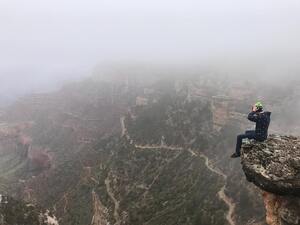
Stories of swapping places are as old as “The Prince and the Pauper” and as recent as “Freaky Friday.” In this case I took a cue from a biblical parable: the rich man and Lazarus. In Luke 16, Jesus speaks of a well-off man who ignores the beggar Lazarus until the two die. Lazarus lands in Heaven, and the rich man wakes up in Hell, and they’re separated by “a great chasm” that keeps the rich man from gaining relief.
 
For me, the “chasm” in this story is one—or many—of our own making. Extreme income disparities keep the poor from succeeding. Systemic racism keeps Blacks, indigenous and people of color from sharing in the American dream. Prejudices—“they’re lazy, they’re scammers, they don’t deserve any help”—are chasms that marginalize entire populations.
 
“The Chasm” puts one of those prejudiced individuals into a homeless man’s shoes. He experiences the despair, the hopelessness, the bigotry—and yes, the eat-a-napkin hunger—that his counterpart lived with every day. But in this story, the rich man isn’t trapped in Hell. Lazare (see what I did there?), suddenly given every resource to succeed in life, sacrifices it all to find and restore his tormentor. But Derek Vayne learns a lesson that will stick with him forever.
 
Many people who read “The Chasm” find it shocking and sobering because it makes the homeless experience real, more than a nameless person with a cardboard sign at a street corner. My hope is, in making it real, we’ll be motivated to do more to help the homeless.
 
“The Chasm” won a community literary award in 2005. I had to update it a little for Random Precision, swapping Derek’s original clamshell cellphone for a smartphone. Virgil’s Real Barbecue is an actual restaurant near Times Square, one of my favorite NYC eateries (though sadly I haven’t been there in several years). The places Derek walks in his wanderings are all places I’ve trod.

0 Comments

Random Precision: 'Coveting Fields'

6/24/2020

0 Comments

 
Picture
This is the first in a deep-dive series on the stories in Rick’s newest book, Random Precision. This blog includes spoilers.
 
“Coveting Fields” was that rare story that came to me like a tidal wave. I knew almost instantly what the story was about, how it would transpire, what the main character would behave. Even the first line hit me abruptly and survived countless edits: “Lila Cooper grew a watermelon, and Ella Dasch threw a fit.” That’s not how my stories normally go. Most of the time I start with a piece of it—sometimes it’s just a mental image—that I write from or toward, and I discover the final tale almost as a reader does.
 
Let’s clear up this one right away: I had no idea a global pandemic was approaching when I wrote “Coveting Fields.” In fact, I wrote the original story in 2012, back when “corona” was just a beer.
 
The prompt for this story was a statewide writing contest. “Coveting Fields” landed a finalist nod from a panel of judges, but the winners were chosen by online voting, which I found mystifying. Basically it came down to how many friends you had.
 
Coveting, the obsessive desire for something even if it costs someone else, is the primary focus of this story. Ella has the most successful farm in the heart of a virus-devastated land, yet she cannot accept another’s achievement. In just a handful of paragraphs, she executes a set of mental gymnastics to justify stealing the prize for herself.
 
Admit it: You’ve done the same. I certainly have. Not to justify theft, but to convince myself that I deserve something, even at the expense of someone else. That last Oreo? That close-up parking space? The car that costs more than I want to spend, but shouldn’t I get it before that other guy?
 
As you read my stories and ponder these blog posts, you’ll soon realize that I like to do parables, which are tales with a moral or spiritual center. No surprise that writers like Rod Serling, a master at morality tales, are among my inspirations. I love to spark a new perspective, a train of thought, a different way of looking at one’s assumptions and behaviors. Such is the case with “Coveting Fields.”
 
In the 1987 film Wall Street, Gordon Gekko declares, “Greed, for lack of a better word, is good.” In Gekko’s view, it fuels a successful economy. But I’ll posit that coveting is at least as essential to his (disturbing) argument. It’s a facet we don’t often think about, and “Coveting Fields” is my attempt to explore it.
 
Interesting postscript: The Kool-Aid Contagion went on to make another, albeit unrealized, appearance. In 2015 I wrote “Torment of Destiny,” an episode for the web series Star Trek New Voyages, in which the villain (played by the amazing Richard Hatch) engineers a virus that liquifies both crops and people who lack certain genetic markers. Though most of it was filmed, the episode remains unfinished and unlikely to be released. The twisted side of me would have loved to see the Contagion do its nasty business on screen.

0 Comments
<<Previous
Forward>>

    ** SPOILER ALERT **

    The blogs in this series contain details of books, stories, screenplays and other writings by Rick Chambers. To avoid spoilers, read or watch the original material before reading this blog.

    Archives

    March 2021
    February 2021
    December 2020
    November 2020
    October 2020
    September 2020
    August 2020
    July 2020
    June 2020

    Categories

    All

    RSS Feed

About Us

Rick Chambers & Associates, LLC, brings a solid track record of strategic, diverse, objective-based communications and public relations services. RC&A works closely with clients to understand their business, develop stakeholder relationships, build meaningful dialogue and help share their stories effectively.

Picture
Rick Chambers & Associates, LLC
1514 Kingsbury Drive
Portage, MI 49002-1664
USA
269.873.5820
[email protected]